
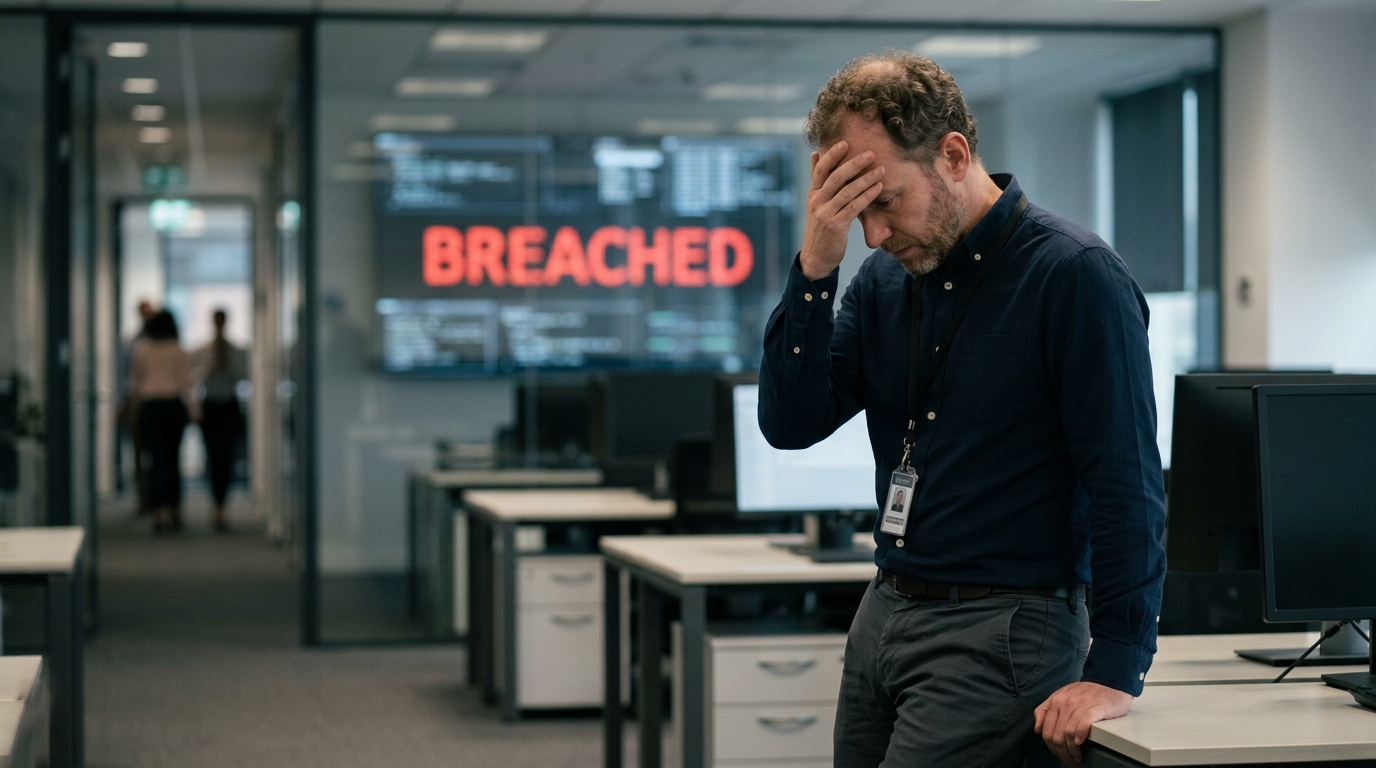
- Breach accountability increasingly reaches beyond the IT budget and into individual careers: CISOs, CIOs, and even CEOs have lost their jobs over breaches their own decisions did not necessarily cause directly.
- Equifax's CEO retired under pressure in 2017 after the breach and a widely criticized disclosure, and Target's CEO resigned in 2014, becoming the first Fortune 500 CEO ousted following a cyberattack.
- Personal legal exposure is real and growing, though not always where headlines suggest: Uber's former Chief Security Officer was criminally convicted, not over the breach itself, but over how it was concealed from regulators.
- The clearest way to reduce this exposure is to reduce the number of preventable, credential-based incidents that create it in the first place, since the accountability conversation almost always starts with a root-cause question.
When a major breach happens, the financial cost gets most of the headlines, but the career cost is what actually reaches the executives closest to the decision. It follows a fairly consistent pattern: certain roles, the CISO first, then the CIO, then the CEO or General Counsel depending on how the response is handled, absorb the fallout. The risk has also shifted in the last two years, from mostly reputational toward something genuinely personal, including confirmed criminal exposure in at least one case.
This piece walks through who actually bears that risk, using real, verified examples, and what a security leader or board can do about the exposure itself, not just the breach.
Why Is the CISO Usually the First to Go?
The CISO is accountable for controls, monitoring, and incident response, which means a board looking for someone to hold responsible usually starts there, even when the breach originated with a third-party vendor or an unpatched system outside the CISO's direct control.
The pattern shows up consistently across major breaches: forced resignation, termination framed as "without cause" to limit the company's own legal exposure, loss of board trust, and a track record that follows the CISO into the next job search. It is close to a designated fall-taker role in modern corporate structure, not because CISOs are uniquely at fault, but because they are the named accountable party when a board needs to show it responded.
When It Reaches the CEO: Two Verified Examples
CEOs are rarely removed over the technical failure itself. They are removed over how the response was handled, and two of the most cited examples in the industry actually prove that distinction.
Richard Smith, Equifax's CEO, "retired" under pressure in September 2017 following the breach and the company's widely criticized disclosure and response, then testified before Congress (CNBC; NPR, 2017). Gregg Steinhafel resigned as Target's CEO in May 2014 following the company's 2013 holiday-season breach, becoming the first Fortune 500 CEO to be ousted following a cyberattack (Forbes; DataBreachToday, 2014).
Neither departure was driven by the specific technical cause of the breach itself; both were driven by how the fallout, disclosure, and investor and customer confidence were handled afterward. These two examples are cited here as governance and accountability context, a pattern of how boards respond, not as incidents any authentication architecture, Proximia's included, would have prevented.
Personal Legal Exposure Is Real, and Not Always Where You'd Expect
The clearest case of individual criminal liability in this space is not the CISO who got breached. It is the CISO who mishandled the response.
Joe Sullivan, Uber's former Chief Security Officer, was convicted of obstruction of justice and misprision of a felony, not for the 2016 breach itself, but for concealing it from regulators. The Ninth Circuit upheld the conviction in March 2025; he was sentenced to probation rather than prison (U.S. Department of Justice; The Record; CBS News). This makes him the first security executive criminally convicted over how a breach was handled, a disclosure and documentation failure, not a technical one. Notably, Uber's CEO and outside counsel were not charged in the same case, underscoring that this exposure attaches to decisions and paper trails, not job titles alone.
It is worth correcting a common assumption here: the SEC's highest-profile attempt to pursue an individual CISO personally, its securities-fraud case against SolarWinds and CISO Timothy Brown, was significantly narrowed by a 2024 court ruling, and the SEC dismissed what remained in November 2025 without a settlement. That does not mean the exposure disappeared. It means the pressure has shifted toward criminal liability for incident response failures, board-level removal, and state or sector-specific regulators, rather than a single federal securities-fraud path.
It Does Not Stop With the CISO
When the root cause is outdated infrastructure or a patching failure, the CIO absorbs the consequence; when disclosure is late or misleading, General Counsel and the Chief Risk Officer are the ones whose judgment gets questioned.
The CIO pattern typically follows legacy systems that were not patched, outdated infrastructure, or weak IT governance: removal or reassignment, loss of budget authority, and board pressure to "modernize leadership." The General Counsel pattern follows flawed reporting, late, incomplete, or misleading disclosure: quiet resignation, replacement during a "leadership refresh," and a loss of influence with the board. The Chief Risk Officer pattern follows cyber risk that was minimized or never properly escalated to the board in the first place.
Beyond the formal exits, there is a quieter cost that rarely makes headlines: recruiters hesitate on an executive's next search, boards question judgment even years later, and those who keep their jobs often see their influence and budget authority shrink anyway. This is the exposure that does not show up in a resignation announcement but shapes a career for years afterward.
What This Means for CISOs, CIOs, and Boards Right Now
The single clearest way to reduce this exposure is to reduce the number of preventable, credential-based incidents that create the accountability conversation in the first place, since most board post-mortems start with a root-cause question about how the initial access happened.
This is not a claim that any single tool eliminates career risk. It is that the accountability conversation almost always starts with how the attacker got in, and removing the user-known password removes the single most common way they do: no credential to phish, steal, or fatigue an approval prompt out of. A breach does not just cost money. It costs careers, and reducing the number of ways in reduces both.
Ready to Close the Gap?
See how removing the password removes the most common entry point behind these incidents. Schedule a conversation at proximia.com/contact.
Frequently Asked Questions
Is a CISO legally liable if their company gets breached?
Generally, simply having a breach happen is not itself a crime. Legal exposure has arisen specifically around how a breach was handled or disclosed, as in the Uber case, rather than from the technical failure alone. This is general, publicly reported information, not legal advice; specific liability depends on jurisdiction, role, and facts, and any organization facing this question should consult its own counsel.
Did the SEC's case against SolarWinds' CISO succeed?
No. A 2024 court ruling narrowed it substantially, and the SEC dismissed the remaining claims in November 2025 without a settlement. Individual executives still face scrutiny from other sources, including state regulators, private litigants, and criminal exposure in cases involving mishandled disclosure.
Why does the CISO usually take the fall even when the breach was not their direct failure?
Because the CISO role is accountable for controls, monitoring, and incident response, boards and the public tend to look there first, even when the root cause traces to a vendor or an unpatched system outside the CISO's direct control.
Can reducing credential-based risk actually reduce personal accountability exposure?
It reduces the number of preventable incidents that trigger the accountability conversation in the first place. It does not eliminate an executive's responsibility for other decisions, such as disclosure timing or overall governance.
What roles besides the CISO face career risk after a breach?
CIOs, typically tied to infrastructure or patching failures; CEOs, tied to how disclosure and public response are handled; General Counsel, tied to flawed regulatory reporting; and Chief Risk Officers, tied to cyber risk that was not escalated to the board.