
Passwordless

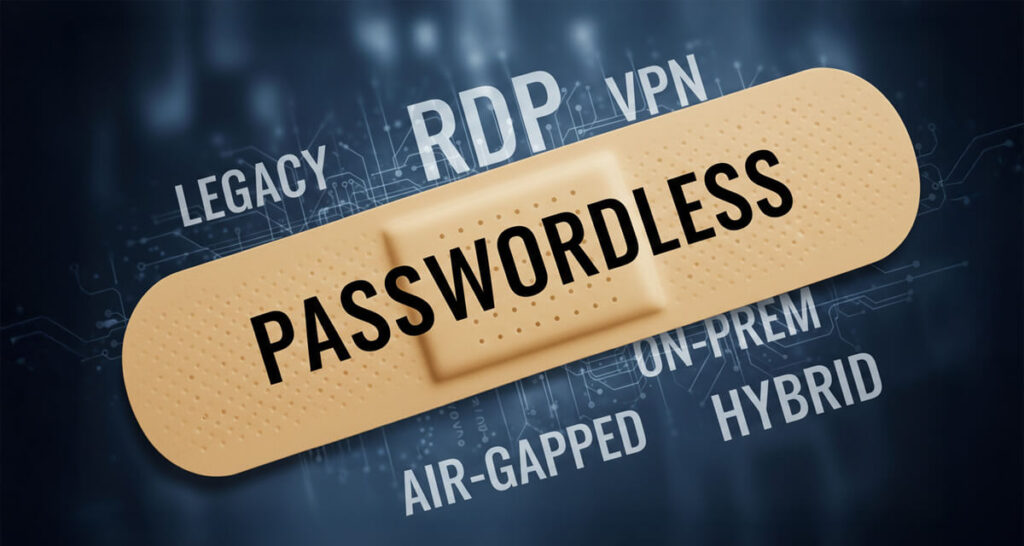
Passwordless security concept with keywords

Passwordless Isn’t Fully Here: Why Hybrid Environments Need Continuous Protection

Passwordless authentication replaces user-managed passwords with cryptographic credentials bound to a device or a biometric. It works well on modern systems. Most organizations, though, run hybrid environments that still include legacy platforms, VPNs, and remote desktop sessions that cannot support modern protocols. Fallback credentials survive in those gaps, which is why protecting the session matters

Passwordless Isn’t Fully Here: Why Hybrid Environments Need Continuous Protection Read More »

The HIPAA Security Rule Update: What Changed, What Slipped, and How to Prepare

CHANGE PUTS ALL YOUR CHOICES TO THE TEST HIPAA Security Rule Is Getting A Much-Needed Upgrade. So What? Updated 1 September 2026. This post was written when the HIPAA Security Rule update was newly proposed. It has still not been finalized, and the timeline has moved twice. HHS has placed the rulemaking under long-term actions,

The HIPAA Security Rule Update: What Changed, What Slipped, and How to Prepare Read More »

User interacting with passwordless authentication technology.

Too Many Authenticators, Too Many Tickets: The Operational Burden of Traditional Passwordless

Authenticator sprawl is what happens when a workforce accumulates more authentication methods than it can manage: a phone app for one system, a security key for another, backup codes somewhere, and a password still sitting underneath as the fallback. Every method has to be enrolled, carried, replaced, and recovered. That lifecycle, not the sign-in itself,

Too Many Authenticators, Too Many Tickets: The Operational Burden of Traditional Passwordless Read More »

Person using biometric authentication at computer.

Passwordless Authentication: What It Is, Why It Matters, and How to Implement It

Passwordless authentication replaces passwords with FIDO2-based passkeys and biometrics, letting users sign in through something they are or have rather than something they must remember and protect. It removes stored credentials as an attack surface while aligning with frameworks such as NIST 800-63B. Paired with continuous, presence-based authentication, it verifies not just who signs in,

Passwordless Authentication: What It Is, Why It Matters, and How to Implement It Read More »

Medical Cybersecurity - 6 Challenges and How to Solve Them

Healthcare’s Top 6 Cybersecurity Challenges—And How to Solve Them

Healthcare organizations face six recurring cybersecurity challenges: ransomware, compliance risk, password fatigue, shared-workstation exposure, remote access, and legacy systems — and passwords sit at the center of most of them. Proximia replaces passwords with live biometrics and persistent proximity via the XiFi Card, closing the shared-workstation gap that passwordless authentication and a Zero Trust approach

Healthcare’s Top 6 Cybersecurity Challenges—And How to Solve Them Read More »

Scroll to Top